Some conversations are
too important
to leave to chance.
When the stakes are high, the room is divided, or the decision has been circling for months — meetings need to be designed, not improvised. That's the work I do.
Meetings that actually work are intentional by design.
For high-stakes meetings, that design is what I bring to the room.
Why bring someone in?
Most leaders are good at their work. Facilitating a room full of people who each bring different contexts, experiences, priorities, and perspectives is a different skill entirely — and it shouldn't have to fall to the person who also needs to lead the outcome.
When you're the leader in the room, you're managing the relationships, the politics, the time, and the conversation all at once. Something gets sacrificed. Usually it's the process — which means the room never quite gets to the place where all those different perspectives become something unified.
- ✦ You participate in your own meeting instead of managing it
- ✦ Every voice gets a path into the conversation
- ✦ The process is designed — not improvised
- ✦ Decisions get made and documented
- ✦ People leave with clarity, not more questions
- ✦ The work after the meeting actually happens
What actually changes when a meeting works.
Research on meeting effectiveness points to two things people need to feel before they'll truly engage:
The sense that my presence here matters — that I contributed something real to this outcome.
The sense that I am part of this team and this decision — not just a spectator to someone else's conclusion.
Bad meetings violate both. One or two voices dominate. The quieter people stop trying. The decision gets made in the hallway afterward by whoever talked loudest.
Effective facilitation creates the conditions for both. Every voice has a path into the conversation. Ideas get captured, considered, and built on — not competed over. The person who is usually quiet leaves having contributed something that shaped the outcome.
That shift doesn't happen by accident. It's designed.
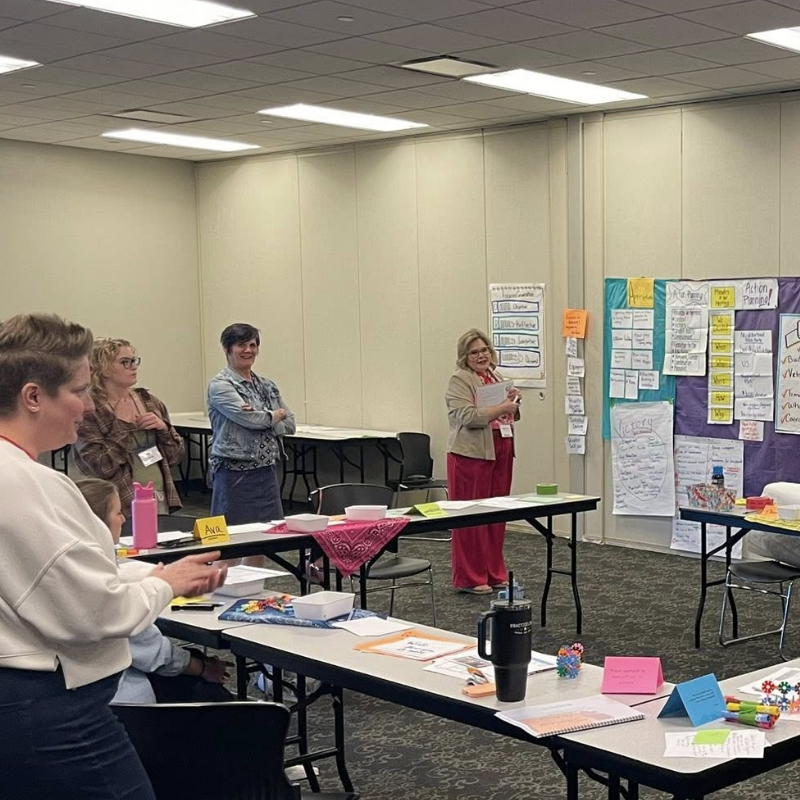
The situations I'm built for.
Your organization needs a plan everyone will actually use. That requires your people building it together — not a consultant delivering a document.
- →Full process design from environmental scanning to implementation
- →Multi-day retreat facilitation
- →Participatory methods that create ownership
When the room represents different organizations, different priorities, and different definitions of success — getting to shared direction takes skilled process design.
- →Multi-stakeholder facilitation
- →Coalition and task force work
- →Cross-sector alignment processes
High-functioning boards do their best work when someone else is managing the room — so the board can focus on the decisions they actually need to make.
- →Annual planning and goal-setting
- →Board retreat design and facilitation
- →Leadership team alignment
Public meetings don't have to be unproductive or adversarial. With the right process, community members feel heard and organizations get the input they actually need.
- →Participatory community processes
- →Public input sessions
- →Visioning and town halls
When a team has been through change, conflict, or a long stretch of circular meetings — a facilitated conversation can clear the air and reset the direction.
- →Post-change team sessions
- →Conflict navigation
- →Meeting culture reset
If your situation doesn't fit a category, that's fine. Most of the best work starts with a conversation about what you actually need.
- →Retreat design from scratch
- →Hybrid and virtual facilitation
- →Anything that needs a neutral process guide
Intentional Design. Proven Results.
Every engagement follows the same four moves — because intentional design isn't optional, it's how the work works. Whether your engagement is a single retreat or a year-long process, this is how I think about it.
A meeting without a clear purpose is the single biggest predictor of a bad outcome. I start with a real conversation to understand what success looks like, what you've already tried, and what's been getting in the way. No design happens until we agree on the aim.
The difference between a meeting that produces something and one that drains energy is intentionality. I design the agenda, the methods, the sequence, and the room — built around your group's real needs, not a template.
In the room, I manage the process so you don't have to. Every voice gets a path in. Ideas get captured, considered, and built on — not competed over. The conversation moves forward and decisions get made.
The goal is never dependency. You leave with clear documentation of what was decided, who owns what, and what happens next. When a group builds a plan together, they own the implementation — and the capability stays with them.
Sometimes the meeting isn't the problem.
Occasionally a facilitated session reveals something deeper — that the challenge isn't the agenda or the process, but the dynamics between the people in the room. How they communicate under pressure. Who defers and who dominates. What happens when the stakes feel high.
That's where Lumina coaching comes in. Understanding yourself and your colleagues at that level changes meetings before they even start.
Asked & answered.
Let's talk about your room.
Whether you have a specific retreat on the calendar or you're just starting to think about what you need — a conversation costs nothing and usually makes the path forward clear.